
The Legacy and Women Behind CCU’s 9 to 5
By Alexandria Boatman
Photos by Lily Whitener
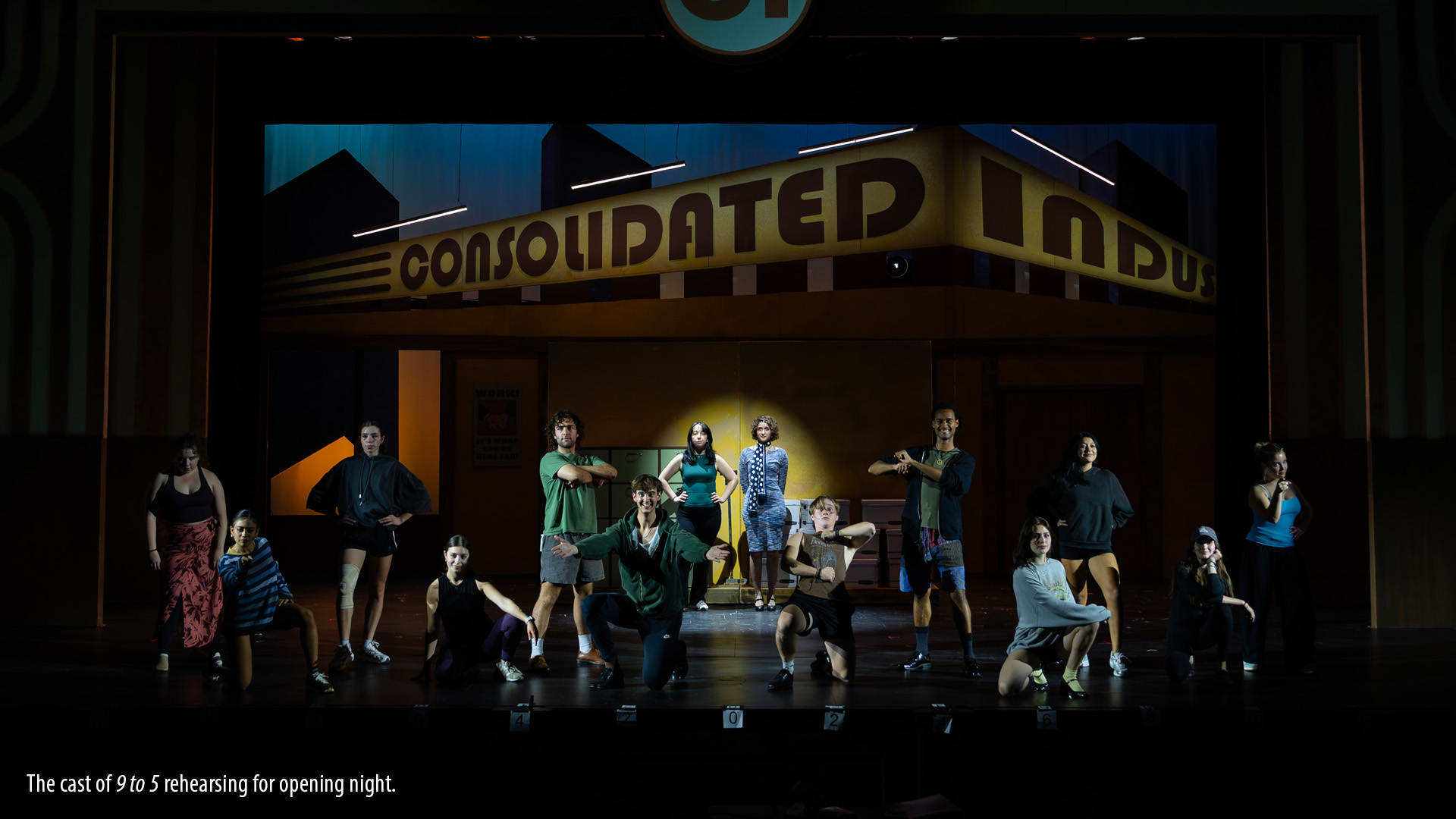
Come October 17, people will be tumbling out of bed and stumbling to Wheelwright Auditorium to watch Coastal Carolina University students pour themselves a cup of ambition as the Department of Theatre presents 9 to 5: The Musical. Following the journey of three strong female coworkers as they take on an egotistical, sexist boss, 9 to 5: The Musical is a witty and high-energy show all backed by music written by Dolly Parton. The production combines comedy, music and an underlying message about women finding their voices and standing up for themselves.
Show dates are Saturday, Oct. 17, 7:30 p.m.; Sunday, Oct. 18, 2 p.m. and 7:30 p.m.; Wednesday-Friday, Oct. 21-23, 7:30 p.m.; Saturday, Oct. 24, 2 p.m. and 7:30 p.m.; and Sunday, Oct. 25, 2 p.m.
As the world mourns the loss of the Queen of Country, Coastal Carolina’s fall theatre production has shifted in nature. This show carries a new, deeper meaning with the loss of Dolly Parton.
For Maeve Myers, senior musical theater major, the show is not only an opportunity to perform but it is also a chance to honor a legacy and send a larger message about women pioneers.
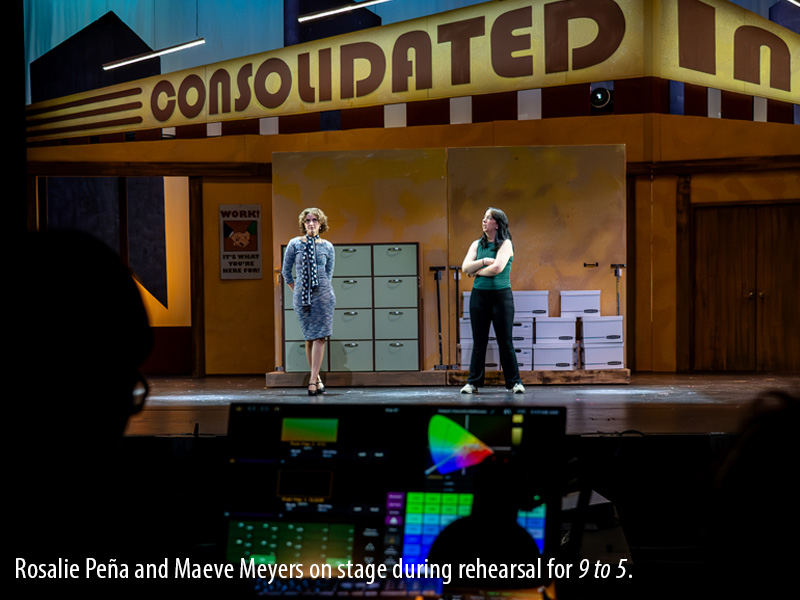
Myers plays Violet Newstead, the oldest of the musical’s three female leads, originally portrayed by Lily Tomlin in the 1980 film. Violet is a widowed mother who works hard to support herself and her seventeen-year-old son. She hopes to earn a promotion at work, but her sexist boss refuses to recognize her because she is a woman. Other major characters include Doralee Rhodes, portrayed by Dolly Parton in the film and played by senior musical theatre major Emily Mentzer; and Judy Bernly, portrayed by Jane Fonda in the film and played by junior musical theatre major Rosalie Peña.
Myers has been journaling about Violet and working through questions about the character’s identity and motivations. One of the biggest questions she hopes to answer is how Violet developed the strength to keep moving forward despite the hardships placed in front of her.
“I wonder if I can discover what she has gone through to give her such a hard shell that lets no one crack through it,” Myers said.
That strength is one of the qualities Myers admires most about Violet. Throughout the story, Violet faces sexism and disrespect from her boss but continues to push forward. “I would like to find that within myself,” Myers said.
While Violet’s story is set in 1979 and 1980, Myers does not believe the musical applies only to that time period.
“You could place 9 to 5 today and it would still make sense,” said Myers.
In 2026, 9 to 5’s themes of workplace inequality and the need for women to stand up for themselves remain familiar. The story, of course, contains humor — like the kidnapping of the women’s boss when he is dramatically tied up and shoved into the trunk of the car, or Violet adding rat poison to his coffee — but the central message is clear.
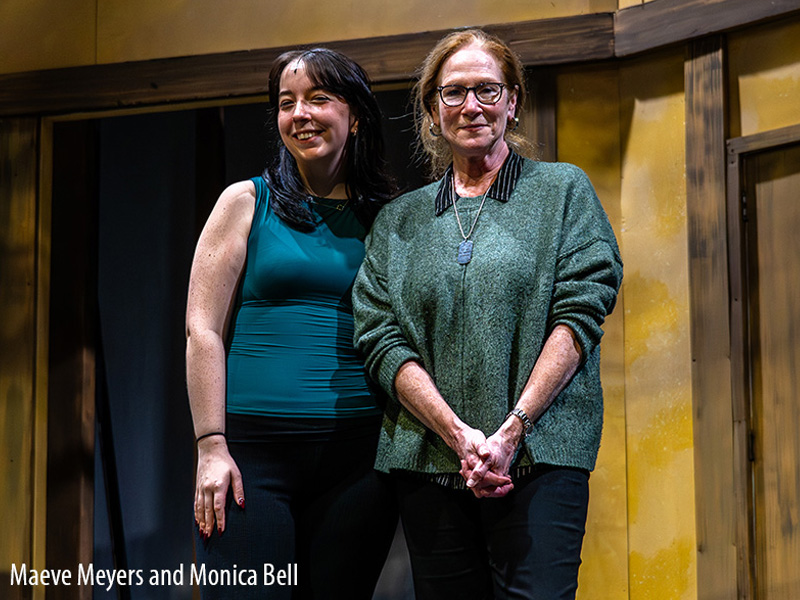
The production, directed by Monica Bell, professor, and choreographed by Alison Levenberg, artist in residence, both of the Department of Theatre, also places women at the center of the creative process. Myers greatly admires the creative team and views them as an extension of the musical’s message.
“It’s a room built on equality,” Myers said.
Having women in leadership positions while working on a musical about women challenging a sexist workplace creates a “full circle” moment for Myers.
Part of that full circle moment comes from the cast. Myers’ time working on the show together with the other lead women has created a very close-knit and special connection. There’s closeness with the three of them both on and off the stage as they take on another show together. With Bell and Levenberg accompanying the trio at rehearsals, they’ve connected and worked as a unit, mimicking the strong female relationships seen in 9 to 5.
The cast learned of Parton’s death only a few days before auditions. Myers initially wondered whether losing the person behind the musical would make the production emotionally difficult. Instead, she said, the cast has found a way to acknowledge Parton’s death while continuing to celebrate her work. Menser agreed, saying Parton’s music and character has always influenced her own life and art.
“With the timing of Dolly passing away, it commemorates her really well,” said Menser.
Parton’s presence remains part of the production itself. The updated script includes voiceover features from Parton, allowing audiences to hear her as part of the show.
“[Dolly’s] heart is fully in this stage,” Myers said, which “makes it more powerful. We’re putting love into the story, but we must put even more.”
That love is already showing up in the rehearsal process. The cast rehearses nearly every day, often from 6:30 p.m. until 10:30 p.m. on weekdays and for several hours on weekends.
To see the hard work and dedication come to fruition, CCU audiences will have to yawn and stretch and try to come to life.
Leave a Reply